
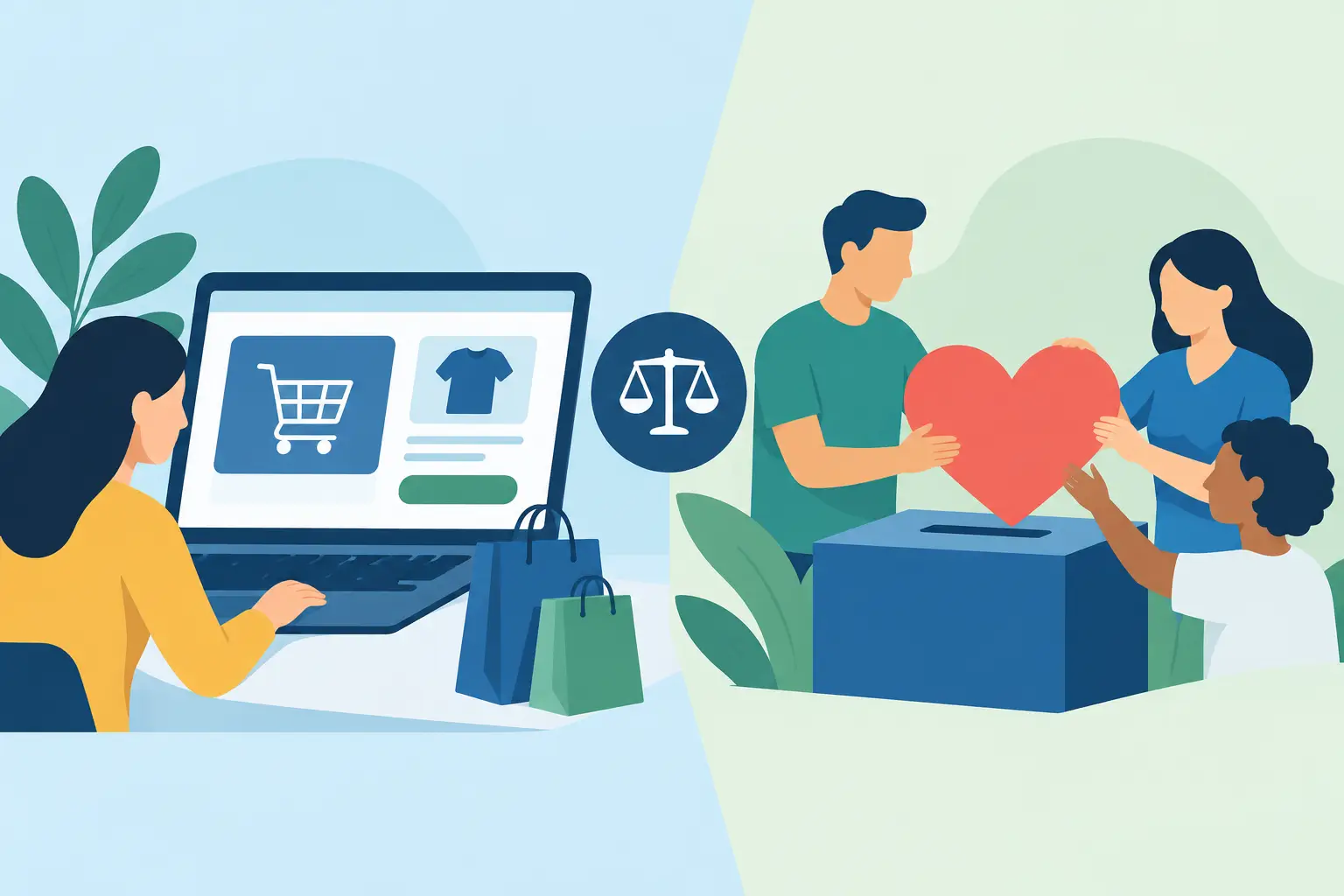
A school fun run can create real energy, but the work often starts long before the first lap. Someone has to collect sponsor sheets, follow up on missing payments, answer questions, and reconcile totals. When comparing online sales versus pledge drives, the best choice is usually the one your volunteers can promote confidently and manage alongside everything else on their plate.
For PACs, school staff, team managers, and community organizers, fundraising is rarely the only responsibility. You may be planning an event, coordinating families, booking transportation, or trying to fund equipment before the season begins. That makes the practical details of a fundraiser just as important as its earning potential.
How pledge drives work
A pledge drive asks supporters to promise a donation, often connected to an activity such as a walkathon, readathon, dance-a-thon, or sports challenge. A participant shares their goal with family and friends, collects pledges, completes the activity, and then follows up to receive the promised funds.
Pledge drives can be a strong fit when the activity itself matters to your community. A readathon can encourage reading. A walkathon can bring students together around a shared experience. If your organization already has a well-attended event and volunteers available to manage it, pledges can build enthusiasm around a visible goal.
The trade-off is administration. Paper pledge forms can be lost or returned late. Even when donations are collected digitally, organizers may still need to track participation, remind supporters, answer questions about payment, and follow up after the event. Results can also depend heavily on each participant’s personal network and willingness to ask for donations.
That does not make pledge drives a poor choice. It means they work best when you have an activity people genuinely want to rally around and a team that can support the extra coordination.
Online sales versus pledge drives: the key differences
Online product fundraising gives supporters something tangible in return for their purchase. Rather than asking, “Will you sponsor me?” families can share a campaign featuring products that people can use, give as gifts, or enjoy at home. The purchase still supports the organization, but the conversation can feel easier for many supporters.
With an online sales campaign, your organization creates a campaign page, shares the link or QR code, and earns a fundraising profit from sales. At Brightraiser, organizations can earn up to 25% profit, depending on campaign sales. We handle online payments, order fulfillment, customer service, sales reporting, and fundraising payouts.
For busy volunteer teams, that division of work matters. You are still responsible for promoting the campaign, because no fundraiser succeeds quietly. But you do not need to collect cash, manage individual order forms, or buy inventory upfront.
Here is how the two approaches often compare in day-to-day planning:
| Consideration | Pledge drive | Online sales campaign | |—|—|—| | Supporter experience | A donation or sponsorship request | A purchase that supports your cause | | Main organizer task | Coordinate the activity and track pledges | Share the campaign link and encourage participation | | Payment follow-up | May be needed after pledges are made | Payments are completed online at checkout | | Inventory risk | Usually none | No upfront inventory purchase with Brightraiser | | Community element | Often centered on a group event | Can run alongside school and team activities | | Reach | Depends on participant outreach | Can be shared beyond your local community |
The right option depends on your goal. If your priority is bringing students together for a memorable activity, a pledge drive may be worth the extra planning. If your priority is raising funds with a lighter administrative load, online sales may be the more practical route.
When online sales may be the better fit
Online sales can be especially helpful when your volunteers are stretched thin. A PAC that is already organizing hot lunches, meetings, and classroom support may not have capacity to run a major event. A youth sports team may need funds for uniforms or tournament costs without adding another weekend commitment for families.
It can also suit organizations with supporters spread across different places. Grandparents, former members, relatives, and friends do not need to attend a school event to participate. They can shop through the campaign page from wherever they are and choose direct-to-home delivery when that option is available.
Product choice matters, too. Curated Canadian-made products give supporters a reason to shop beyond the fundraising appeal alone. A supporter may choose an item for their own household, purchase a gift, or share the campaign with someone who appreciates buying from Canadian businesses. That creates a more natural message than a request for a one-time donation.
Online campaigns can run for a fixed fundraising period or remain open year-round. A limited campaign can create a clear focus for back-to-school fundraising, holiday gifting, or a specific trip. A year-round page may suit an organization that wants an ongoing option to share in newsletters, team communications, and community updates.
Be clear about delivery before you launch
Delivery is one of the first questions families will ask, so decide how you want to handle it before sharing your campaign. Direct-to-home delivery offers convenience for supporters and removes the need for your team to sort orders. Ship-to-school or ship-to-organization delivery can work well when your group has a reliable way to receive and distribute purchases locally. Hybrid arrangements may offer flexibility where available.
If you choose ship-to-school delivery, be realistic about the volunteer time involved. Someone will need to receive the shipment, organize orders, communicate pickup details, and handle any local distribution. That can still be worthwhile for your community, but it should be part of the plan rather than an afterthought.
A simple message helps set expectations: explain where supporters shop, when the campaign ends if it has a closing date, and how delivery will work. Clear communication reduces questions and helps families feel confident placing an order.
Make either fundraiser easier to promote
Whether you choose a pledge drive or online sales, your fundraising message should answer three questions quickly: what are you raising money for, how can people help, and when should they act?
Specific goals are easier to support than general requests. “Help fund new basketball equipment” gives supporters a clearer reason to participate than “support our team.” “Help our PAC bring a science workshop to the school” connects a purchase or donation to a real student experience.
For an online sales fundraiser, keep promotion simple and consistent. Share your campaign link with families, include the QR code on a poster or handout, and remind your community through the communication channels you already use. A short note from a coach, teacher, or PAC can carry more weight than a complicated promotional plan.
You do not need to post every day or ask families to become salespeople. A few thoughtful reminders work better when they clearly explain the purpose and make participation easy. Encourage supporters to share the link with relatives and friends who may enjoy the products and want to help your organization.
A manageable three-step approach
Online sales fundraising works best when the process stays simple. First, create a campaign that explains your organization and what the funds will support. Second, share the link with families and your wider community through the channels they already check. Third, earn fundraising profit from qualifying campaign sales while the platform manages the online shopping process.
Before launching, choose one person to be the main campaign contact and decide who will help with communication if needed. Set a realistic promotional schedule, especially if your campaign has a fixed end date. If local distribution is part of your delivery plan, assign that responsibility early.
The goal is not to eliminate every task. It is to choose a fundraiser where the tasks match your available time and your community’s habits.
A pledge drive can create a memorable shared event. An online sales campaign can give your organization a flexible, low-overhead way to raise funds through products supporters are happy to buy. If your team needs a practical starting point, create a campaign, share it with your community, and keep the focus on the meaningful program, equipment, or experience you are working to fund.