
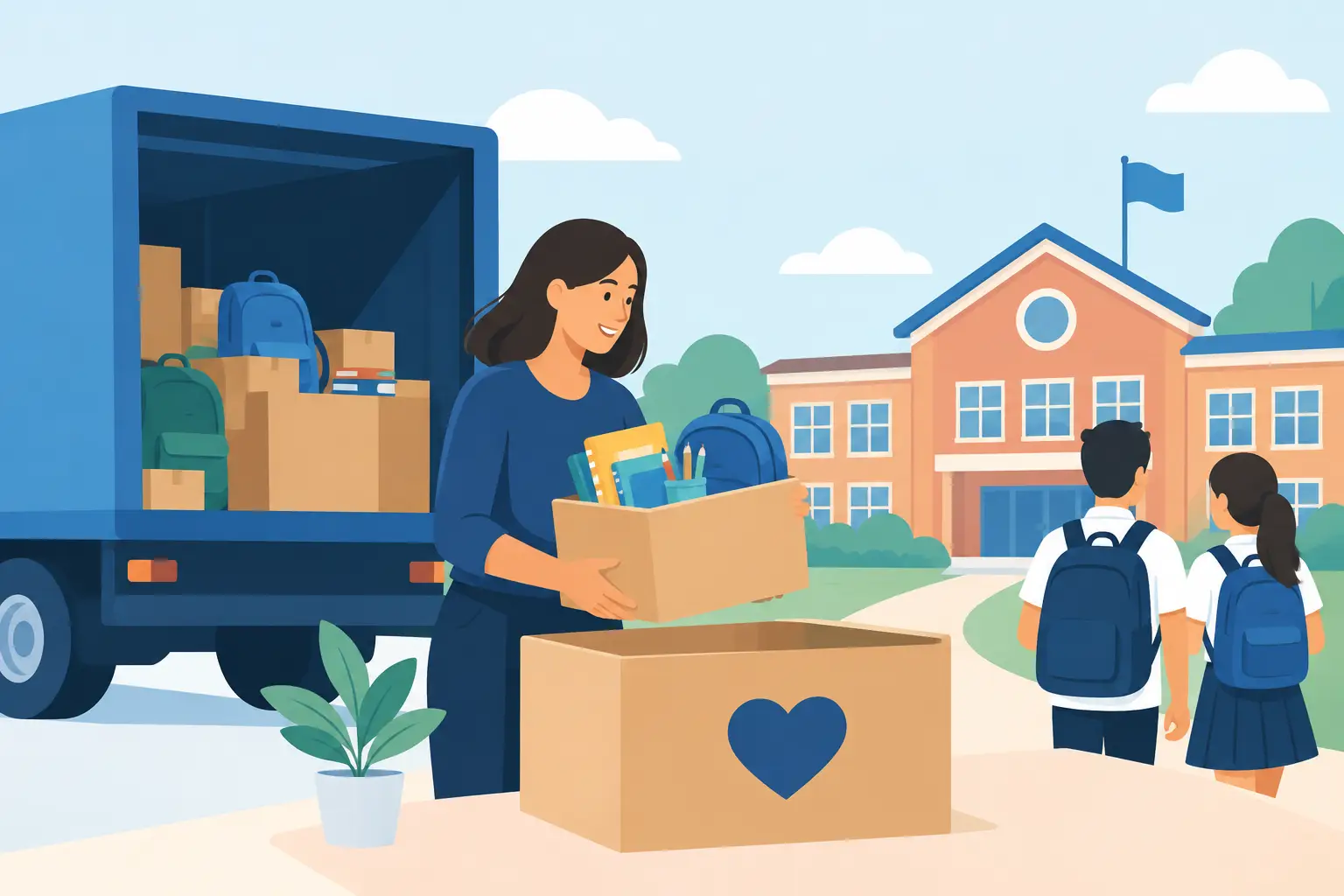
A fundraiser can look easy from the outside: share a link, collect orders, celebrate the total. For the volunteers coordinating it, delivery is often where the real work begins. Ship to school fundraising gives families one central pickup location, which can be convenient and community-building, but it works best when the delivery plan is clear before the campaign begins.
For school PACs, parent councils, teams, and youth programs, the goal is not simply to raise money. It is to fund the field trip, equipment, classroom resource, tournament, or program without creating a second unpaid job for a handful of volunteers. A well-run ship-to-school campaign can help you do that when you choose the right campaign setup, communicate early, and organize pickup day thoughtfully.
What Ship to School Fundraising Means
With ship to school fundraising, supporters place their orders online during your campaign. Instead of each order being delivered to a home, campaign orders are sent together to the school or organization for local distribution. Families then pick up their purchases at the location and time you arrange.
This delivery option can be especially useful when your community is concentrated around one school or program. It gives organizers a natural way to connect with families at pickup, and it can make delivery feel like part of the fundraiser rather than an extra task for every shopper.
It is not the right choice for every campaign. If your supporters live across a wide area, include many grandparents or out-of-town friends, or have limited access to volunteers and storage space, direct-to-home delivery may be a better fit. A hybrid arrangement can also make sense: local families use school pickup, while distant supporters choose home delivery where available.
The key is to select the option that respects your volunteer capacity. Central delivery can simplify the shopper experience, but it shifts some responsibility to your organization. You will need a delivery contact, a safe place to receive orders, and a plan for families to collect them.
Why Central Pickup Can Work Well
School pickup solves a practical problem for busy families. Parents are already coming to school for drop-off, pickup, practices, meetings, or events. Giving them a familiar collection point can be easier than asking them to wait at home for a package.
It can also strengthen the connection between a purchase and its purpose. When supporters pick up products at school, they see the volunteers and community behind the campaign. That reminder matters. A purchase of Canadian-made products becomes more than a transaction – it helps pay for something meaningful for students and participants.
For organizers, the biggest advantage is having one predictable delivery moment rather than trying to track many individual orders. There is still work involved, especially on pickup day, but it is work you can plan for. Clear organization is what keeps that work manageable.
Create a Campaign With Delivery in Mind
The first step is to create a campaign and decide how ship-to-school delivery will fit your organization’s schedule and space. Before sharing anything, identify the person who will receive delivery updates and the volunteers who can help sort or hand out orders.
Think through the practical details honestly. Is there a staff member or PAC volunteer who can accept the delivery? Is there a secure, dry area where boxes can stay temporarily? Can you schedule pickup around dismissal, a school event, or a team practice? If the answer to one of those questions is no, adjust the plan early rather than hoping it will work itself out later.
At Brightraiser, organizers create a personalized campaign page, while we handle online payments, order fulfillment, customer service, sales reporting, and fundraising payouts. That means you do not need to collect cash, build an order spreadsheet, or purchase inventory upfront. Your role is to promote the campaign and coordinate local distribution if you choose ship-to-school delivery.
Campaign timing deserves attention too. A fixed campaign can create a focused window for promotion and a defined pickup period. A year-round campaign may suit an organization that wants an ongoing way for supporters to contribute, but it requires a delivery approach that remains realistic over time. Choose the structure that your volunteers can maintain comfortably.
Share the Link and Set Expectations Early
The second step is to share your campaign link or QR code with families, friends, and the wider community. Promotion is still essential. An online fundraiser removes paper forms and payment chasing, but people need to know why you are raising money and when to shop.
Keep your message specific. Tell supporters what the funds will help cover, whether that is new sports equipment, a music program, transportation, classroom experiences, or another concrete goal. Then explain the delivery choice in plain language: orders will be shipped to the school, and pickup details will be shared after the campaign closes or when orders are ready.
Do not bury delivery information at the bottom of a long announcement. Include it in the first campaign message and repeat it in reminders. Families need to understand that they are selecting a school pickup option, not expecting a package at their front door.
A simple communication plan is usually enough. Share the campaign at launch, send a reminder midway through, and give a final reminder before it closes. Use the channels your community already checks, such as school newsletters, parent emails, team messages, or social posts. Ask families to share beyond the immediate school community too. Relatives and friends may be happy to support, particularly when they can buy useful, giftable products while contributing to a cause they care about.
Prepare for Delivery Day Without Overcomplicating It
The third step is to earn fundraising profit from supporter purchases, with your organization earning up to 25% depending on campaign sales. When orders are ready for school delivery, a little preparation helps the pickup process feel calm rather than chaotic.
Start by choosing a pickup window that matches family routines. A table near the main entrance after school may work for one community, while a scheduled evening pickup or distribution during a school event may work better for another. Avoid a plan that depends on one volunteer being available for several consecutive days unless that person has explicitly agreed to it.
Before delivery arrives, confirm where boxes will go and how you will identify orders. If there are enough volunteers, sort orders alphabetically or by classroom. Label a pickup area clearly and keep a list of orders that have been collected. You do not need an elaborate system, but you do need a reliable one.
For larger campaigns, these four details make a real difference:
- Assign one person to receive the delivery and confirm the drop-off location.
- Set a pickup date, time, and location before families begin asking.
- Bring enough volunteers to sort orders and answer questions during busy pickup periods.
- Send a reminder with collection instructions shortly before pickup day.
Consider privacy and storage as well. Orders should not be left in an unsecured hallway or exposed to weather. If a family cannot pick up during the scheduled window, decide in advance how long you can hold the order and who they should contact. A clear policy protects volunteers from last-minute confusion.
Make the Work Visible, Not Heavy
The best ship-to-school fundraisers divide responsibility into small, realistic tasks. One person may manage campaign communications, another may coordinate the delivery location, and a few volunteers may cover pickup day. When responsibilities are shared, no one has to carry the entire campaign.
It also helps to be transparent about what the fundraiser does and does not handle. Your organization is raising money through product sales, not running a retail store. You are coordinating a community pickup, while the fundraising platform handles the online ordering side. That distinction reassures volunteers who worry that they will be responsible for every question or payment issue.
If your campaign serves a community with varied schedules, a hybrid delivery arrangement may reduce pressure. Local families can collect orders at school, while supporters who are farther away can use a delivery option that suits them. The best model is not always the one with the fewest boxes at school. It is the one that makes participation easy enough for supporters and sustainable enough for your volunteers.
Ship-to-school delivery works best when it feels organized, friendly, and proportionate to the size of your campaign. Create your campaign, share the link with a clear pickup message, and give your volunteers a simple plan for delivery day. That leaves more energy for the reason you started fundraising in the first place: helping your students, players, and community programs do more.