
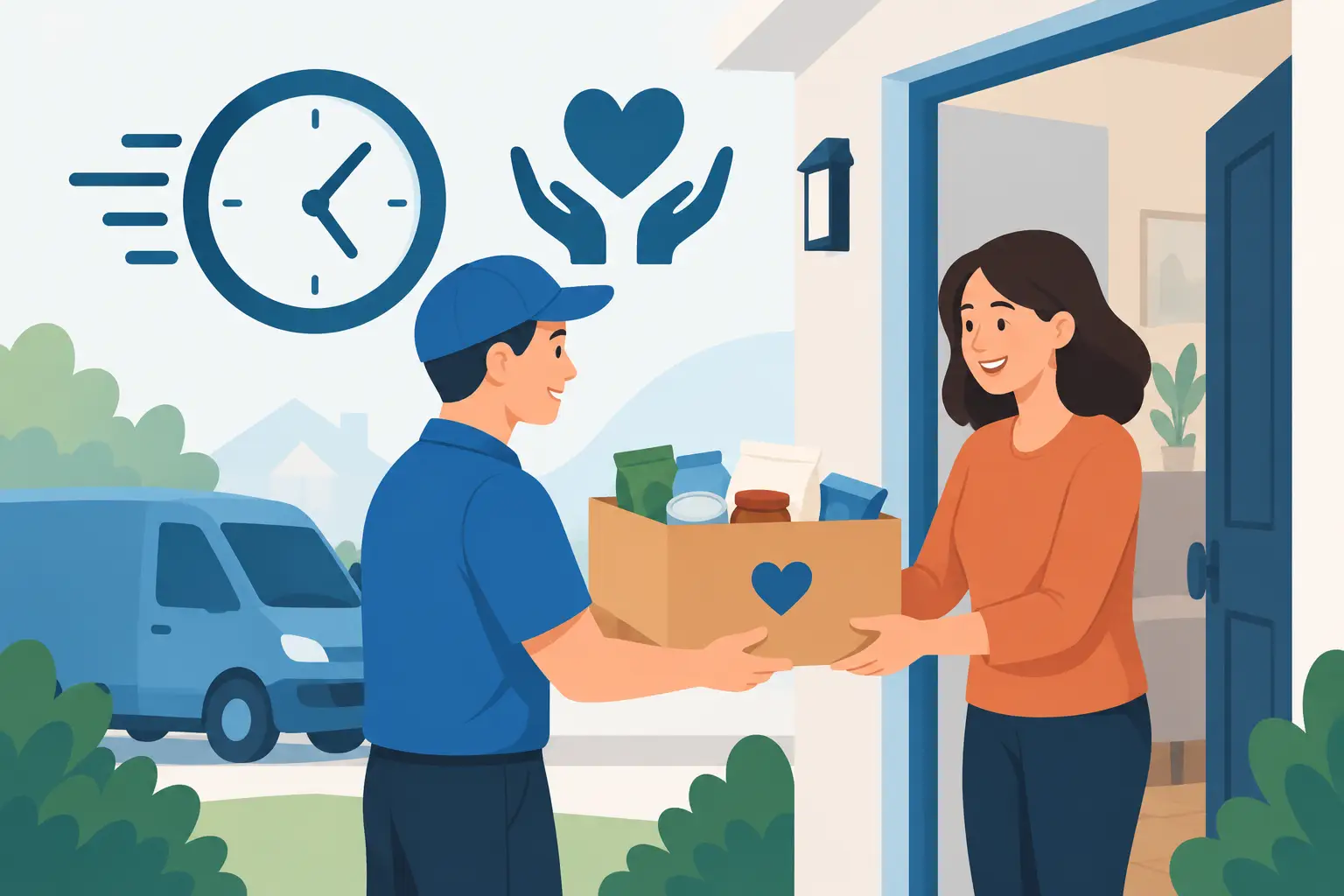
A school fundraiser should not leave a parent council sorting boxes in a gym, chasing missing order forms, or asking families to bring cash to school. A fundraiser with home delivery gives supporters a simpler way to contribute: they shop online when it suits them, and their orders are sent to their homes.
For busy school PACs, sports teams, youth programs, and community groups, that convenience can make a meaningful difference. It removes some of the most time-consuming parts of product fundraising while still giving supporters a tangible purchase and a clear reason to participate. The goal is not to make fundraising completely hands-off – your organization will still need to share the campaign – but to make the work more manageable.
Why home delivery works for busy organizers
Traditional fundraising often creates two separate projects. First, volunteers collect orders and payments. Then they receive products, organize them by family, arrange pickup times, and deal with missed pickups or damaged items. Even a successful campaign can feel like a logistical burden.
With direct-to-home delivery, supporters place and pay for orders online. They can shop from a campaign page using a link or QR code, without needing a paper form or a student to carry an envelope back and forth. Orders are fulfilled and delivered directly to the shopper, so organizers do not need to turn a classroom, hallway, or garage into a temporary distribution center.
This format is especially helpful when your supporters are spread across different neighborhoods. Grandparents, relatives, coworkers, and friends can participate even if they do not live near the school or organization. A shareable campaign link gives them a straightforward way to help from wherever they are.
Home delivery also gives families more flexibility. They can browse products in the evening, make a purchase after seeing a social media post, or send a campaign to someone who wants to support the cause but cannot attend an event. That matters because fundraising participation is often less about willingness and more about timing.
What organizers still need to do
Convenience does not replace communication. The strongest campaigns make it easy for supporters to understand what they are funding, how to shop, and when to share the campaign with others.
Your role is to give the campaign a purpose. Instead of simply asking people to buy products, explain what the funds will help provide. It might be new sports equipment, transportation for a tournament, classroom resources, a year-end celebration, youth programming, or a community activity. Specific goals make a request feel more meaningful.
You will also need to promote the campaign consistently. A single announcement may reach some families, but reminders usually help others act. Share the campaign link in your regular school or team communications, include the QR code where appropriate, and encourage families to pass it along to relatives and friends. Keep the message short: what you are raising funds for, how supporters can shop, and when the campaign closes if it has a set end date.
The good news is that this work is communication, not order administration. You can focus on inviting participation rather than collecting payment envelopes, checking totals, and sorting products.
How a fundraiser with home delivery works
A home-delivery campaign can be organized around three practical steps: create a campaign, share the link, and earn fundraising profit.
1. Create a campaign
Start by setting up a personalized campaign page for your organization. This is where supporters will shop and where you can identify the cause they are supporting. Decide whether your campaign should run for a fixed period or remain open year-round. A short campaign can create a clear focus around a specific need, while an ongoing campaign can give supporters more opportunities to contribute over time.
Before you launch, agree on a simple fundraising message. A clear statement such as “We are raising funds for new team uniforms” is easier for supporters to understand and repeat than a broad request for help. If your group has several needs, choose the one that will resonate most with families and the wider community.
With Brightraiser, there are no setup fees, annual fees, or upfront inventory purchases. We handle online payments, order fulfillment, customer service, sales reporting, and fundraising payouts, allowing organizers to spend more time on the purpose behind their campaign.
2. Share the link
Once the campaign is live, share your link with families. Send it through the communication channels people already use, such as a school newsletter, team email, parent group message, or social media post. The easier the link is to find, the easier it is for people to take part.
It helps to vary your message slightly as the campaign progresses. Your first message can introduce the goal. A later reminder can highlight that purchases support the organization and can be useful for everyday use or gifting. If families are comfortable sharing, encourage them to send the link to people who care about the child, team, or program.
Avoid making supporters feel pressured. A warm, direct invitation is more effective than repeated urgency. Let people know that every purchase helps and that they can support the group by sharing the campaign even if they do not shop themselves.
3. Earn fundraising profit
When supporters shop through your campaign, your organization earns a share of sales. Brightraiser campaigns can earn up to 25% profit, depending on campaign sales. Because the process is online, you can review sales reporting without manually tallying individual order forms.
This model works well when you want fundraising revenue without purchasing inventory in advance. You do not have to predict how much product to order, store unsold items, or collect money before placing a group order. Supporters purchase what they want directly, and your organization’s earnings are tied to campaign sales.
Direct-to-home, ship-to-school, or a hybrid approach?
Home delivery is a strong choice when volunteer capacity is limited or supporters live across a wide area. Still, it is not the only option. Some organizations prefer ship-to-school delivery because a central pickup point suits their community, especially when families are already at the school or practice location regularly.
The trade-off is responsibility. With ship-to-school delivery, organizers coordinate local distribution. That can work well for a smaller group with reliable volunteers and a clear pickup plan, but it requires space, time, and communication. Direct-to-home delivery reduces those tasks, though supporters will receive individual deliveries rather than picking up items together.
A hybrid arrangement may suit groups with different needs. For example, families who prefer a central pickup may use one option while supporters farther away choose home delivery. The right approach depends on your volunteer availability, supporter geography, and how much distribution work your group can realistically take on.
Make the campaign easy to support
The best fundraising messages are specific, brief, and easy to act on. Supporters should be able to answer three questions quickly: Who benefits? What am I buying? How do I participate?
A parent or relative may be happy to purchase a Canadian-made product because it is useful or giftable, but the connection to your cause gives the purchase extra meaning. Tell them what their order supports. A simple sentence can do the job: “Your purchase helps our youth program cover equipment costs for the season.”
Keep your campaign page and announcements focused on that shared purpose. You do not need a complicated sales pitch. You need a clear reason to support the group and a reliable way for people to shop.
A practical fit for community fundraising
A fundraiser with home delivery is not automatically the right choice for every organization. If your group has a large volunteer team, a convenient central location, and supporters who prefer in-person pickup, ship-to-school delivery may be a good fit. But when volunteer time is scarce, online ordering and direct delivery can remove a major source of stress.
For many organizers, the real value is not just where the products go. It is the ability to run a campaign without handling every payment, order, question, and pickup yourself. That leaves more room for the work your organization is trying to fund in the first place.
Choose a clear goal, create your campaign, and share the link with the people who care about your community. A simple shopping experience can help turn everyday purchases into support for the activities, equipment, and opportunities your group wants to make possible.