
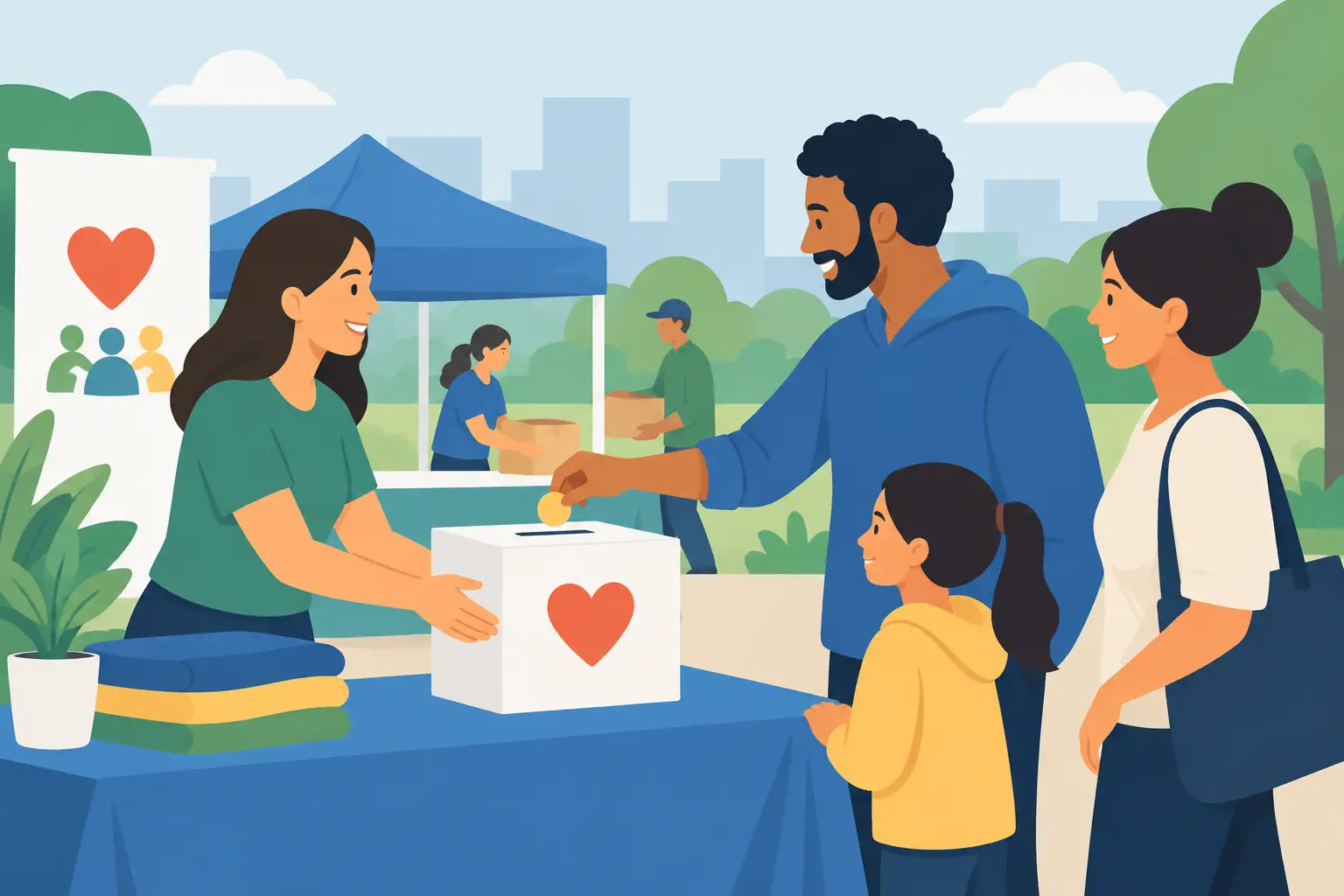
A community program fundraiser example is most useful when it reflects real volunteer constraints: limited time, no room to store boxes, and a clear reason families and supporters should participate. For a youth club, PAC, sports team, or local program, the best fundraiser is not necessarily the loudest one. It is the one people can understand quickly, share easily, and run without creating extra work for a small group of organizers.
Consider a community youth program that needs funds for art supplies, recreation equipment, and transportation for local activities. Rather than asking volunteers to collect paper order forms, manage cash, and sort products in a gymnasium, the program runs an online product fundraiser. Supporters shop through a personalized campaign page, and the program earns fundraising profit from qualifying sales.
The campaign still needs promotion. No fundraiser runs itself. But the administrative work stays manageable because online payments, customer service, sales reporting, and order fulfillment are handled for you.
A Practical Community Program Fundraiser Example
Imagine the North Shore Youth Activity Club, a fictional after-school program serving children ages 7 to 12. Its coordinators want to raise money for outdoor games, craft materials, and a year-end community celebration. Their target is simple: give families and local supporters a useful way to help without asking participants to go door to door or volunteers to take on a large inventory project.
They choose a product fundraiser featuring curated Canadian-made products. That choice matters because supporters are purchasing items they can use themselves or give as gifts, while also supporting a local program. The fundraising message is straightforward: shop online, choose products you like, and a portion of each qualifying purchase supports the youth club.
The club has three volunteers leading the campaign. One creates the campaign page, one prepares a few emails and social posts, and one checks in with the program coordinator. They agree on a campaign end date and explain what the money will support before they begin sharing.
This is a useful model for many groups because it avoids a common fundraising problem: choosing a campaign that raises money but requires more volunteer labor than the team can reasonably provide.
Step 1: Create a Campaign Around a Specific Need
A clear purpose gives people a reason to act. “Support our program” is kind, but “Help us purchase new recreation equipment and supplies for 40 children” tells supporters what their purchase makes possible.
For this example, the youth club writes a short campaign description:
> Help the North Shore Youth Activity Club fund new art supplies, outdoor play equipment, and our year-end community celebration. Every purchase through our fundraiser supports more creative, active afternoons for local children.
The wording is warm without overpromising. It does not claim that every dollar goes to one item or suggest a guaranteed fundraising total. It simply connects purchases to a meaningful program need.
With Brightraiser, organizers create a personalized campaign page and select the delivery arrangement that suits their group. There are no setup fees, annual fees, or upfront inventory purchases. That can be especially helpful for a community program that wants to protect its budget and avoid storing products before they are sold.
Before launching, the coordinators decide how long the campaign should run. A fixed campaign period can create a clear promotion schedule and make it easier to communicate a deadline. A year-round campaign may be a better fit for a program that wants an ongoing option for families, relatives, and community members who ask how they can help. The right choice depends on the group’s goal, its communication capacity, and whether there is a timely need to highlight.
Step 2: Share the Link Where Supporters Already Pay Attention
The club does not expect one social media post to carry the campaign. Instead, the volunteers share the campaign link and QR code through the channels families already use: the weekly program email, a parent newsletter, a private family group, and a sign near pickup.
Their first message focuses on the purpose. Their next message shows people how easy it is to participate. A final reminder near the end of a fixed campaign gives supporters who meant to shop another opportunity to do so.
Here is the kind of message the club might send:
> Our online fundraiser is now open. Shop Canadian-made products for your home or gifting, and help us fund supplies and activities for the North Shore Youth Activity Club. Please share our campaign link with grandparents, friends, and neighbors who may want to support local youth programs.
That last sentence is important. Families are often the starting point, but their networks help a campaign reach beyond the immediate program community. A relative in another city can still shop online and support the cause. The best request is specific and easy to pass along: share the link, not a complicated explanation.
Promotion works better when it feels useful rather than repetitive. For example, organizers can mention a different program need in each update, share a photo of children using existing supplies with appropriate permissions, or remind supporters that purchases can serve everyday needs and gifts. Keep the focus on the community benefit, not pressure.
Step 3: Earn Fundraising Profit Without Managing Payments
As supporters shop, the youth club earns up to 25% profit, depending on campaign sales. Organizers can monitor sales reporting without chasing cash, tallying order forms, or manually reconciling payments.
That difference changes the volunteer experience. In a traditional product sale, volunteers may spend hours handling envelopes, confirming orders, following up on missing payments, and sorting products. In this model, supporters purchase online and the platform handles online payments, order fulfillment, and customer service.
Delivery is the one area where organizers should make an intentional choice. Direct-to-home delivery can reduce the group’s distribution responsibilities. Ship-to-school or organization delivery can be useful when a program has a convenient pickup location and volunteers available to coordinate local distribution. A hybrid arrangement may suit a group with a mix of supporter preferences.
There is no single best delivery choice. A small volunteer team with no storage space may prefer direct-to-home delivery. A school or club with a staffed pickup event may find ship-to-organization delivery practical. Before launch, be clear with families about the selected option and who will coordinate pickup if local distribution is involved.
What Makes This Fundraiser Example Repeatable
The North Shore Youth Activity Club succeeds not because it has a huge marketing budget or a large team. It succeeds because its fundraiser is built around a realistic plan. The group knows what it is raising money for, assigns a few manageable responsibilities, and gives supporters a simple way to participate.
Other community organizations can adapt the same approach. A soccer team might raise money for tournament travel. A school PAC may support classroom resources or a playground project. A community center could fund youth workshops, cultural events, or equipment. The product selection may appeal to different supporters, but the structure stays the same: create a campaign, share the link, and earn fundraising profit.
It also helps to set expectations internally. The organizer responsible for the campaign should not have to write every message, answer every question, and distribute every order alone. Ask a few parents, coaches, or program staff to each share the campaign once or twice. A modest, coordinated effort is more sustainable than relying on one volunteer to carry the whole fundraiser.
Start With a Goal Families Can See
Before you create your campaign, write one sentence that explains what the funds will help provide. Then choose a campaign length and delivery approach that fit the capacity of your volunteers. Those small decisions make promotion clearer and help supporters feel connected to the outcome.
A fundraiser can be manageable when the work is shared, the purpose is visible, and buying something useful also helps strengthen the program your community cares about.