
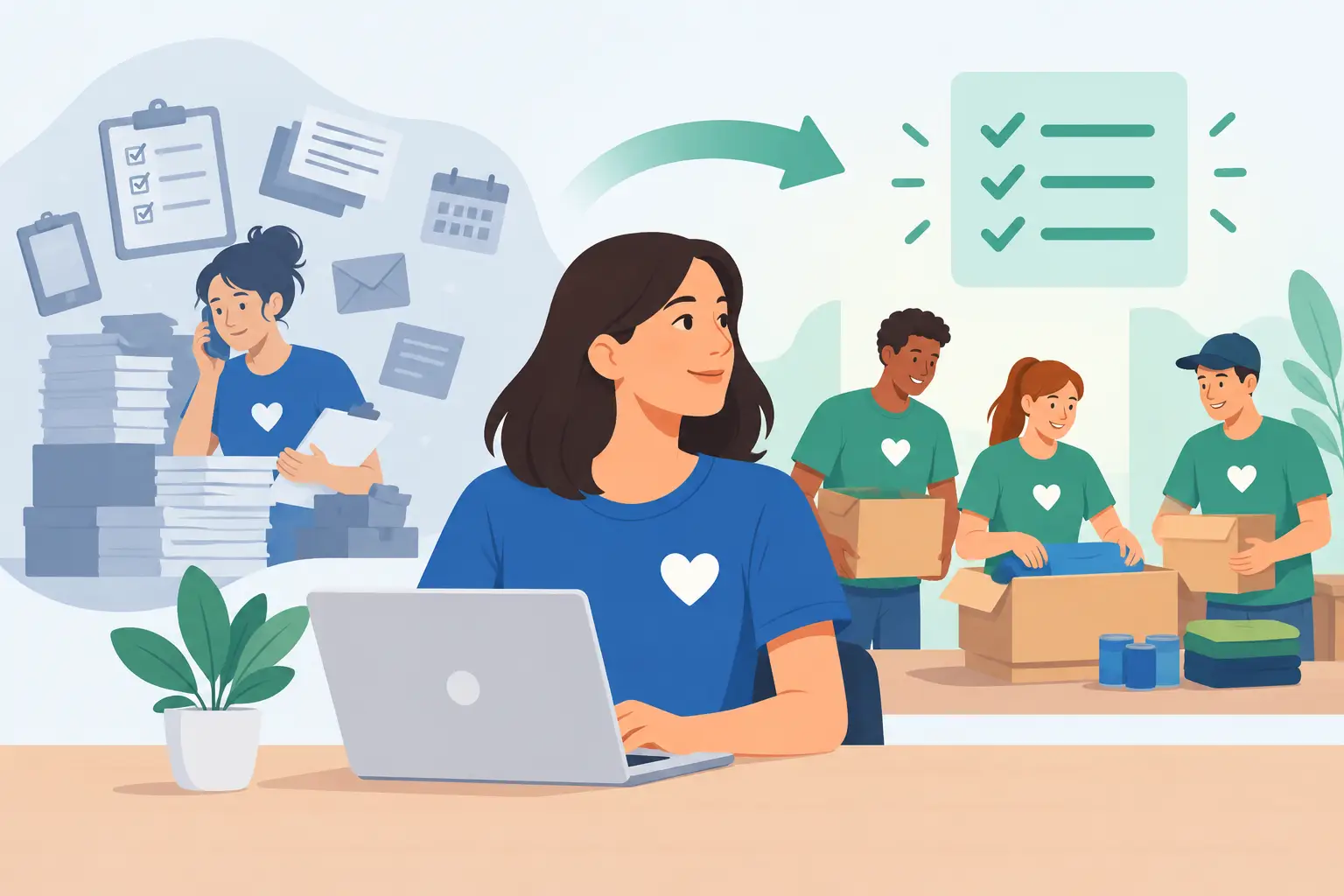
The fastest way to reduce fundraiser workload is to stop treating your volunteer team like a sales force, order desk, payment processor, and delivery company all at once. Parents, coaches, PAC members, and program coordinators already give their time generously. A fundraiser should help fund the things your community cares about, not create weeks of chasing forms and sorting cash.
A better approach is to choose a campaign model that keeps the organizing work focused on a few high-value tasks: setting up the fundraiser, telling supporters why it matters, and keeping them informed. When payments, orders, and customer questions are handled in one place, volunteers can spend more time on the school trip, new equipment, or program they are trying to fund.
Start by choosing a low-admin fundraiser
The fundraiser itself determines much of the workload. Traditional catalog fundraisers can create a long chain of tasks: handing out forms, collecting money, checking totals, following up on missing payments, placing a group order, sorting items, and resolving errors. Those steps may work for a small, highly organized group, but they put a lot of pressure on a few volunteers.
Before committing to a campaign, ask what your team will actually need to manage. The simplest option usually lets supporters browse and pay online themselves. It should also provide clear order records, so you are not building spreadsheets from handwritten forms or trying to match e-transfers to orders.
Product choice matters, too. A fundraiser is easier to promote when supporters can buy useful, giftable products rather than feeling as though they are making a donation out of obligation. Curated Canadian-made products can give families, friends, and neighbors a practical reason to shop while supporting a local organization and Canadian businesses.
No fundraiser is entirely hands-off. You will still need people to share the campaign and answer organization-specific questions. The goal is not to eliminate volunteer involvement. It is to remove the repetitive work that does not require a volunteer’s time.
How to reduce fundraiser workload in three steps
A manageable online campaign follows a straightforward rhythm: create a campaign, share the link, and earn fundraising profit. Keeping those steps clear makes it easier to recruit help and explain the fundraiser to your community.
1. Create a campaign with clear decisions upfront
Set the campaign up around one specific purpose. Families are more likely to support a fundraiser when they know what it will help pay for, whether that is uniforms, classroom resources, tournament travel, musical instruments, or youth programming. A simple message such as “Help us fund new team equipment” is easier to repeat than a long explanation of every budget need.
Decide early whether the campaign will run for a fixed period or stay open year-round. A limited campaign can create a natural communication schedule and a clear finish line for volunteers. An ongoing campaign may suit organizations that want a low-maintenance option they can share during the year, especially around holidays, team events, or community gatherings. The right choice depends on how often your group can realistically promote it.
With Brightraiser, you can create a personalized campaign page without setup fees, annual fees, or upfront inventory purchases. We handle online payments, order fulfillment, customer service, sales reporting, and fundraising payouts. Your organization earns up to 25% profit based on campaign sales.
Assign one person to be the main organizer, but avoid making that person responsible for every communication. Decide who will share updates through the school newsletter, team email, parent group, or social channels. Give each person a small, defined task rather than a vague request to “help with fundraising.”
2. Share one link instead of managing individual orders
A campaign link or QR code can replace a stack of paper order forms. Supporters can shop when it suits them, whether they are a parent ordering after work or a grandparent supporting from another city. They can also share the campaign with friends and relatives without needing a volunteer to collect another order.
Make sharing easy by giving families a message they can copy. Keep it short: explain what the fundraiser supports, include the campaign deadline if there is one, and ask them to share it with people who may enjoy the products. You do not need a new message every day. A launch announcement, a mid-campaign reminder, and a final reminder are often enough for a fixed campaign.
Consistency matters more than volume. Use the communication channels your community already checks. For a school, that may be the weekly newsletter and a parent email. For a sports team, it may be the team app and a post after practice. Repeating the same campaign link prevents confusion and keeps volunteers from answering questions about where to order.
It also helps to make the reason for the fundraiser visible in every update. People respond well to a clear, tangible goal. Instead of saying, “Please support our fundraiser,” say, “Each purchase helps our program cover registration support and new supplies.” This gives supporters a reason to act while keeping the tone positive.
3. Earn profit without becoming the customer service desk
The best workload reduction happens after supporters place their orders. If customers can receive order updates and get help directly from the fundraising provider, volunteers are less likely to spend evenings tracking packages or answering questions about payment confirmations.
Delivery is the one area that may still require local planning. Direct-to-home delivery is generally the lowest-effort choice for organizers because supporters receive their orders at their own addresses. It can be particularly helpful for larger communities, families with busy schedules, or campaigns where supporters live far from the organization.
Ship-to-school or ship-to-organization delivery can work well when your group has a convenient pickup location and a reliable team for distribution. It may create a community pickup moment, but it also means organizers need space, a pickup plan, and volunteers to sort or hand out orders. A hybrid arrangement can offer flexibility, but only if the delivery instructions are clear from the start.
Choose the option that fits your actual volunteer capacity, not the option that sounds most ambitious. If only two people can manage distribution, direct-to-home delivery may be worth choosing. If your school already has a staffed event or an organized pickup process, local distribution may be manageable. Clear expectations protect volunteers from last-minute surprises.
Build a process your next organizer can repeat
Fundraising becomes lighter when each campaign leaves behind a usable process. Save the messages that worked, note which communication channels reached the most families, and write down who handled each task. The next PAC chair, team manager, or program coordinator should not have to reinvent the campaign from scratch.
Keep reporting simple as well. Rather than sending supporters a complicated financial breakdown, share a warm update about the purpose their purchases helped support. Internally, keep a record of campaign dates, delivery choices, and the final fundraising amount. That gives your organization a useful reference when planning future goals.
It is also reasonable to scale back. If your team is stretched thin, one well-run fundraiser can be more valuable than several campaigns that exhaust volunteers and supporters. A campaign people can understand and share easily has a better chance of becoming a repeatable community tradition.
Start with a campaign structure that lets your volunteers focus on the cause, share the link with families, and keep their energy for the people and programs they serve.