
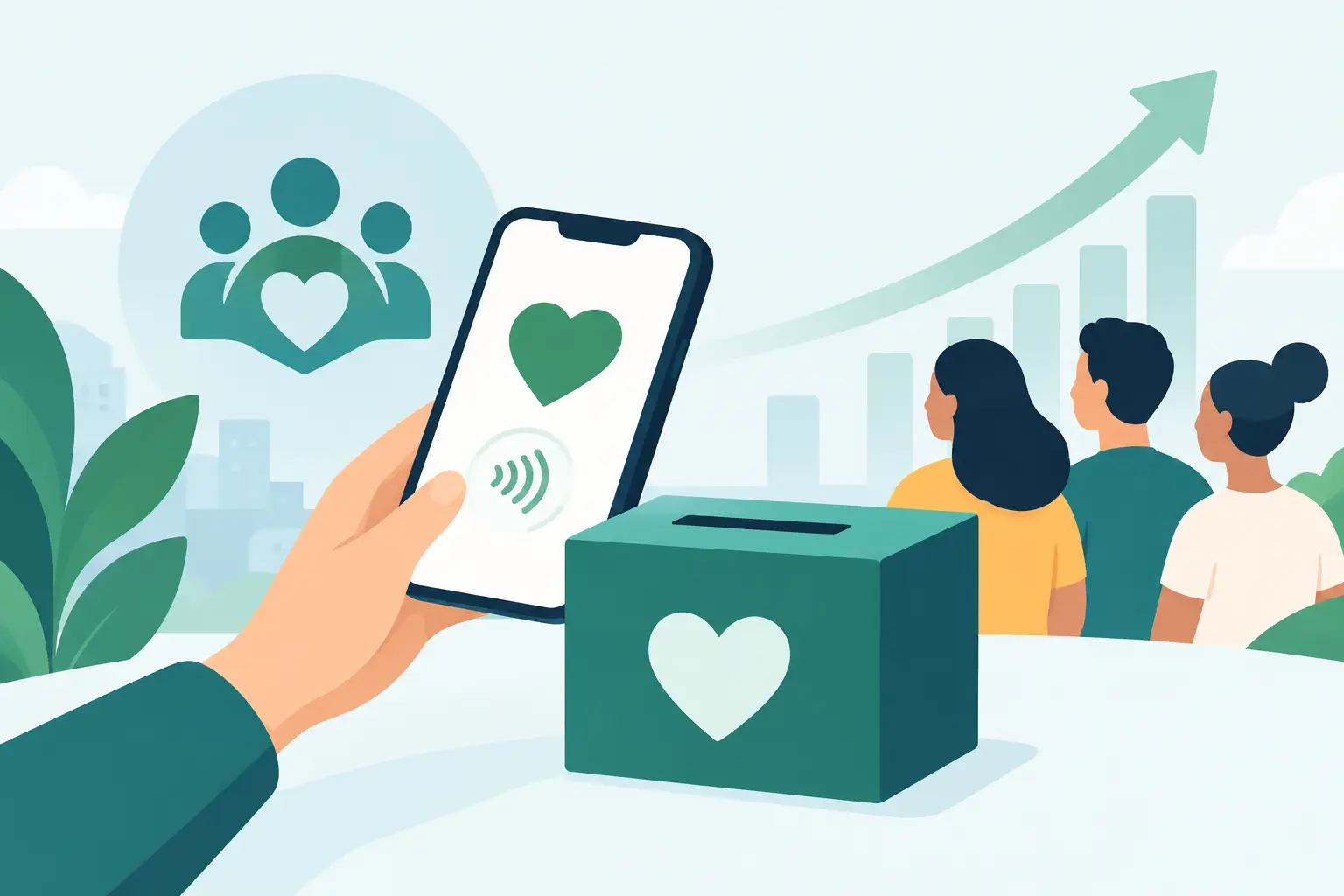
The school gym used to be the fundraising headquarters: order forms in backpacks, cash envelopes to count, and volunteers chasing down missing payments. Cashless fundraiser trends 2026 point to a different model. Families expect to support a cause from their phone, organizers need fewer administrative tasks, and a fundraiser has to fit around already-full school, team, and community calendars.
For PACs, coaches, and program coordinators, this shift is not about replacing the personal side of fundraising. It is about spending less time managing transactions and more time explaining what the money will make possible: a field trip, new equipment, a tournament, classroom resources, or a youth program that can welcome more participants.
Cashless Fundraiser Trends 2026 for Community Groups
The biggest change is that fundraising is becoming more like everyday shopping. Supporters see a campaign link in an email, text message, or social post, browse products when it suits them, and pay online. They do not need exact cash, a paper catalogue, or a child to remember an order form.
That convenience matters, but it is not a reason to run a fundraiser on its own. The better question is whether a cashless program removes the work that tends to overwhelm volunteers. A good option should give you a simple campaign page, clear sales reporting, secure online payment handling, and a straightforward way to share the campaign with families and supporters.
Supporters want flexibility, not pressure
Parents and relatives often want to help, but they may miss a deadline, live in another city, or simply prefer to shop after work. An online fundraiser lets people participate on their own schedule. It can also make it easier for grandparents, former team families, and community members to support an organization without attending an event.
This does not mean every campaign should be open forever. A fixed campaign can create focus, especially when you are fundraising for a specific trip or purchase. A year-round option can make more sense for an organization with an ongoing need and an active community that can continue sharing the link. The right choice depends on your goal, your audience, and how much promotion your volunteer team can realistically maintain.
QR codes are becoming a practical handoff
A QR code is useful because it shortens the distance between interest and action. Put it on a poster at a tournament, include it in a newsletter, or display it at a school event. A supporter can scan, shop, and complete their purchase without needing to type a web address later.
Still, a QR code is not a promotion plan. It works best alongside a clear message. Tell people what their purchase supports, when the campaign ends if there is a deadline, and how they can share it with others. A small explanation gives the code a purpose.
Product fundraising is shifting toward useful purchases
People are more selective about what they buy. Fundraisers built around products for gifting or everyday use can feel easier to support because the purchase has value beyond the donation itself. For Canadian organizations, products made in Canada can add another meaningful layer: supporters can help a local cause while choosing goods connected to Canadian businesses.
The key is fit. A product lineup should feel appropriate for the families and supporters you are asking to shop. Before launching, consider whether the products are likely to appeal as gifts, household items, or repeat purchases. Avoid assuming that a long catalog automatically creates better results. A curated selection is often easier to explain and share.
What Cashless Fundraising Does and Does Not Solve
Online payments reduce several common headaches. You do not have to collect and count cash, reconcile handwritten forms, or send repeated reminders about money that has not been turned in. When the platform handles payments and provides sales reporting, you can see campaign activity without building your own spreadsheet from scratch.
But cashless fundraising does not eliminate the need for communication. Your supporters still need to hear about the campaign more than once, and they need a clear reason to participate. The strongest campaigns usually have a simple fundraising goal and a small group of people who are comfortable sharing the message through the channels families already use.
Promotion does not need to become a full-time job. Start with an announcement that names the goal, explains how to shop, and includes the campaign link. Follow up midway through the campaign with a progress update or a reminder about the purpose. Near the end, send one final, respectful message if there is a closing date. For a year-round campaign, occasional updates tied to a new season, program need, or event can keep it visible without overwhelming your community.
Delivery is another area where the details matter. Direct-to-home delivery may be the lowest-work option for organizers. Ship-to-school or organization delivery can be convenient for families picking up from a familiar location, but someone will need to coordinate local distribution. A hybrid arrangement may suit groups that want to offer choice. Consider your storage space, volunteer availability, and how easily families can collect orders before selecting a delivery approach.
A Low-Work Way to Run an Online Fundraiser
The most manageable cashless fundraisers follow three clear steps: create a campaign, share the link, and earn fundraising profit.
First, create your campaign page. Choose the organization name and the details supporters need to recognize your cause. Keep the description specific. “Help fund new jerseys for our U13 team” is easier to understand than a general request for support.
Next, share the link with your community. Send it through the school newsletter, team email, parent group, and any organization-approved social channels. If you use a QR code, include it where supporters are already gathered, such as a game, concert, meeting, or community event. Encourage families to share the link with friends and relatives who may want to support from farther away.
Then, earn fundraising profit as supporters shop. With Brightraiser, organizations can earn up to 25% profit depending on campaign sales, while we handle online payments, order fulfillment, customer service, sales reporting, and fundraising payouts. There are no setup fees, annual fees, or upfront inventory purchases, so you can focus on communicating your goal rather than buying products before you know what will sell.
That division of work is especially helpful for volunteer-led groups. You remain responsible for promoting your campaign and, if you choose ship-to-school delivery, coordinating local distribution. The platform takes on the operational work that does not need to sit with a PAC treasurer, team manager, or busy parent volunteer.
How to Choose a Cashless Fundraiser for 2026
Before committing, look past the promise of “easy online fundraising.” Ask practical questions. Is there an upfront cost? Who processes payments? Who answers customer questions? Can supporters shop from outside your immediate neighborhood? What delivery options are available? How clearly can you track sales and fundraising profit?
Also consider the experience for your supporters. If the campaign page is difficult to understand or the products do not feel relevant, even a well-intentioned community may not participate. The simplest programs give supporters a clear path from learning about the cause to completing a purchase.
For schools and youth groups, trust matters as much as convenience. Families want to know where their money is going, organizers need accurate records, and volunteers need to avoid taking on financial risk personally. A cashless program should support that confidence with transparent terms and a process that is easy to explain.
The most useful trend for 2026 is not a new payment method or a clever QR code. It is the move toward fundraisers that respect people’s time. When buying is simple, the purpose is clear, and the behind-the-scenes work is handled thoughtfully, your community can put more energy toward the programs and experiences it cares about.
If your group is planning its next fundraiser, start with one concrete goal and choose a campaign format your volunteers can comfortably promote. A manageable fundraiser is more likely to earn support, build trust, and leave your team ready for the next opportunity.