
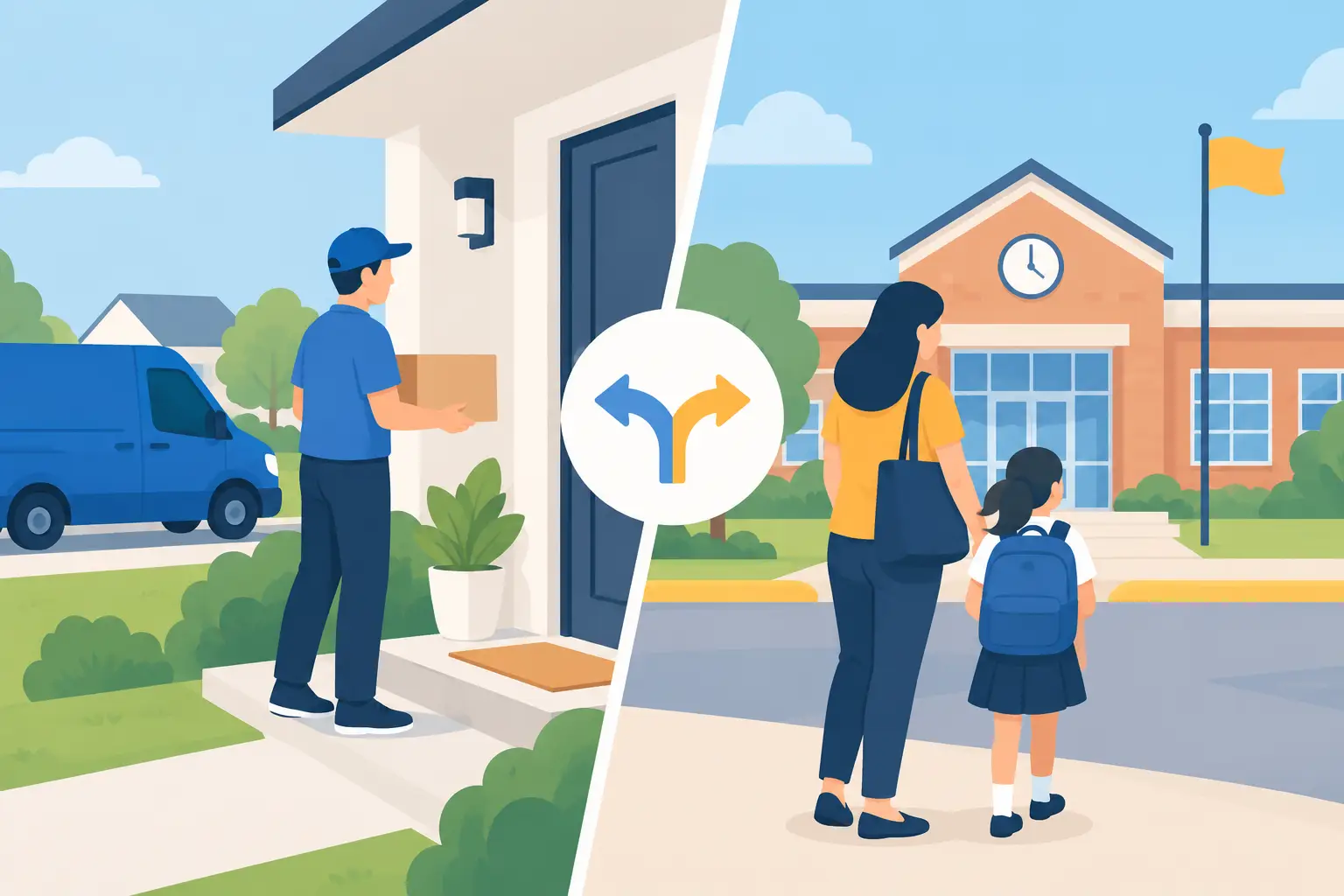
A successful fundraiser should support your goal, not create a second job for the volunteers running it. When deciding between direct shipping versus school pickup, the best choice usually comes down to one practical question: where will your supporters find it easiest to receive their orders, and where can your team realistically manage the work?
Both delivery options can work well for school PACs, teams, and community groups. Direct shipping prioritizes convenience for families and supporters. School pickup can create a familiar local handoff and may suit a tightly connected community. The right option depends on your audience, your volunteers, and the type of campaign you are planning.
What direct shipping means for your fundraiser
With direct shipping, supporters place their orders through your online campaign page and have purchases sent to their home. They do not need to remember a pickup date, come to the school, or coordinate with an organizer after ordering.
For organizers, this option removes the biggest delivery task: sorting and handing out individual orders. We handle online payments, fulfillment, and customer service, while you focus on sharing your campaign link with families, friends, and your wider community.
Direct shipping is especially helpful when your supporters are spread out. Grandparents in another city, former families, coworkers, and friends can all shop without needing to be near the school or program. That wider reach can matter when you are raising money for a field trip, new equipment, team fees, or a special activity.
Why supporters often prefer it
Home delivery is simple. A parent can order when they have a few minutes in the evening, and a relative can support the cause without asking someone to collect an item for them. This can be particularly appealing for giftable and everyday products, since shoppers can order for themselves while supporting an organization they care about.
It also reduces the chance of missed pickups. Busy families already manage school schedules, practices, appointments, and work commitments. Removing one more calendar item may make participating easier.
The trade-off to consider
Direct shipping gives organizers less control over the final handoff because orders travel directly to shoppers. If a supporter has a delivery question, they should use the available customer service process rather than asking a volunteer to investigate it.
You will also want to make delivery expectations clear in your campaign messages. Supporters should understand that their order is being shipped to their own address, not sent to the school. Clear wording prevents assumptions and keeps your volunteer inbox lighter.
When school pickup is the better fit
Ship-to-school or organization delivery sends campaign orders to one central location. Organizers then coordinate local distribution to families and supporters.
This approach can work well when the school has an established pickup routine, a convenient space for receiving boxes, and volunteers who are comfortable organizing a distribution day. It may also suit a campaign where most buyers are current families who already visit the school regularly.
School pickup can feel more personal. A PAC may choose to pair distribution with a school event, a sports team may hand out orders after practice, or a community group may set a defined collection window. When it is well planned, that local moment can reinforce the connection between supporters and the cause.
The work behind a pickup table
The key is to be realistic about the workload. Someone needs to receive the shipment, confirm where it can be stored, sort orders, communicate the pickup details, and manage any orders that are not collected on time. That work is manageable for some groups, but it should not be treated as an afterthought.
Before choosing school pickup, ask whether you have enough help during the distribution period. A single volunteer can end up carrying too much if boxes arrive during a busy school week or if pickup hours are limited. Consider who has access to the building, who can lift and move boxes, and what happens if a family cannot come on the scheduled day.
School pickup also requires precise communication. Supporters need the location, dates, hours, and instructions for collecting their orders. If a friend or relative who lives farther away orders through the campaign, they may not be able to use this option easily.
Direct shipping versus school pickup: compare the real priorities
There is no universal winner. Direct shipping is generally the lower-workload option for volunteers and the more flexible option for supporters. School pickup can be a good choice when your community is local, your distribution plan is clear, and your group has people ready to coordinate it.
Think about your fundraiser through these practical priorities:
- Volunteer capacity: Direct shipping minimizes local handling. School pickup asks your team to manage receiving, sorting, and distribution.
- Supporter location: Direct shipping is a strong fit for out-of-town family and community supporters. School pickup works best when most buyers are nearby.
- School access: Pickup requires a suitable place to receive and store orders, plus permission and access for organizers.
- Timing: Home delivery avoids a single pickup event. Central pickup can be useful if your group wants to create one organized handoff.
- Communication: Both options need campaign promotion, but school pickup also needs detailed distribution instructions and follow-up.
For many volunteer-led groups, time is the deciding factor. If your PAC is already coordinating events, managing budgets, and responding to families, direct shipping may protect your team from unnecessary tasks. If your organization has a reliable group of volunteers and a familiar pickup process, school delivery may fit naturally into your operations.
A hybrid arrangement can offer flexibility
Some fundraisers benefit from a hybrid approach. This can allow supporters to choose the delivery option that works best for them, while giving your organization a central pickup choice for local families.
A hybrid arrangement is not automatically the right answer, though. More options can mean more communication to manage. Your campaign messages need to explain each choice clearly, including which orders will be sent directly and which will be available for local pickup.
Choose a hybrid model only if your team can confidently manage the pickup portion. Flexibility is valuable, but a simple campaign that volunteers can run well is usually better than a complicated one that creates confusion.
Start with your campaign plan, not the delivery method
Delivery is one decision within a larger fundraising plan. The strongest campaigns keep the process straightforward: create a campaign, share the link, and earn fundraising profit from supporter purchases.
First, create a campaign that clearly explains what your organization is raising money for. Families are more likely to share and shop when they understand whether their purchase supports classroom resources, a tournament, an outdoor program, or another meaningful goal.
Next, share your campaign link with families and encourage them to pass it along. A short message that explains the cause, the campaign timing, and delivery options is more useful than a long announcement. Repeat the message through the channels your community already uses, such as school newsletters, team communications, and parent groups.
Then, let the campaign do its job. With Brightraiser, your organization can earn up to 25% profit depending on campaign sales, while we manage online payments, order fulfillment, customer service, sales reporting, and fundraising payouts. You still need to promote the campaign, but you do not need to collect cash or purchase inventory upfront.
Make the choice easy for your community
If your priority is reaching more supporters while keeping volunteer delivery tasks low, direct shipping is likely the practical choice. If you have a strong local network, a suitable distribution location, and volunteers ready to help, school pickup can create a reliable community handoff.
Whichever option you select, explain it early and use the same language in every campaign message. Families should never have to guess where their order is going or what they need to do next.
Choose the delivery model your volunteers can sustain, then put your energy into telling your community what their support will make possible.